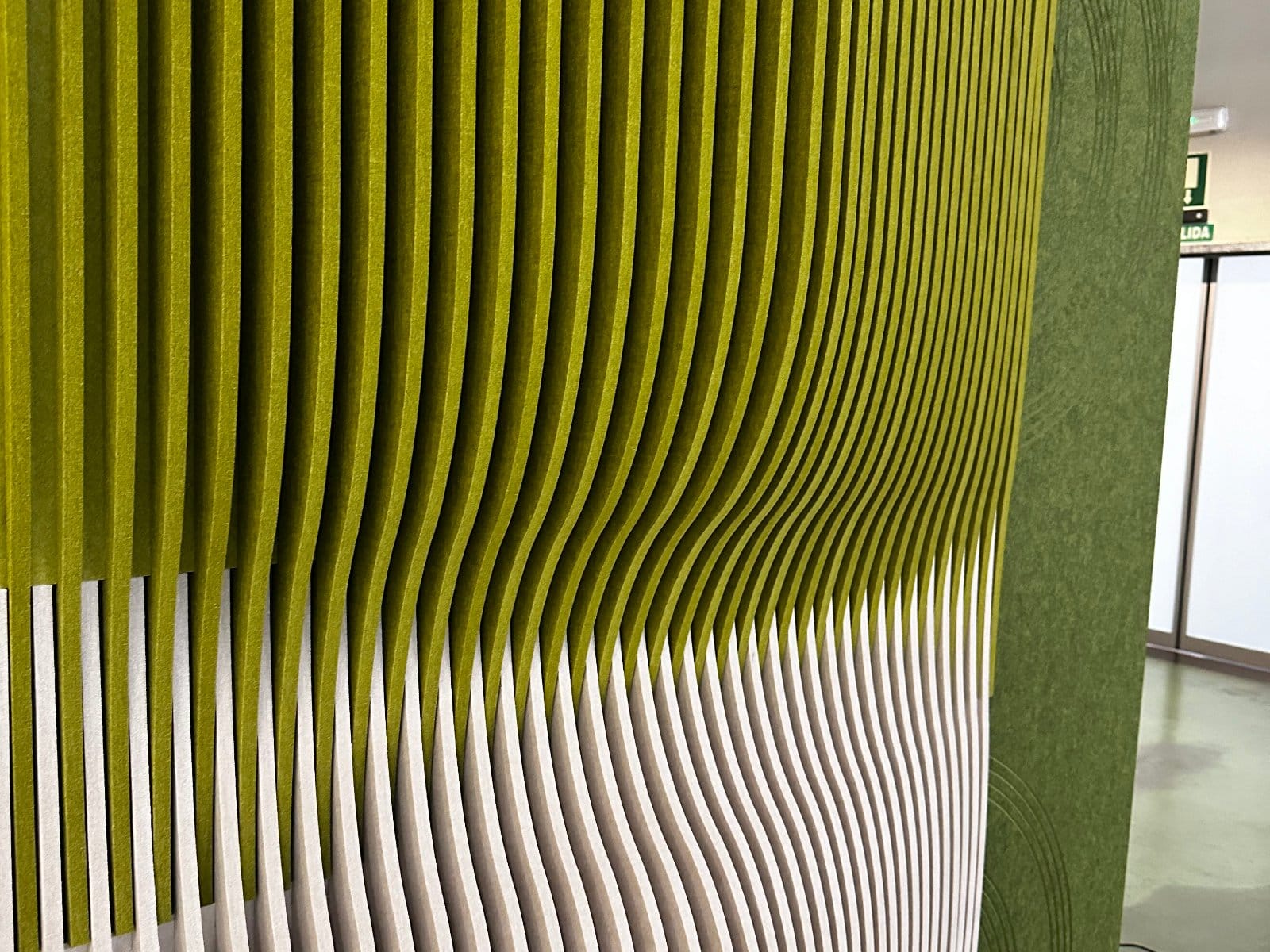
Acoustics are now part of the project's language
For a long time, acoustic treatment was seen as a concession: something necessary that had to be hidden or solved with the least possible visual impact.
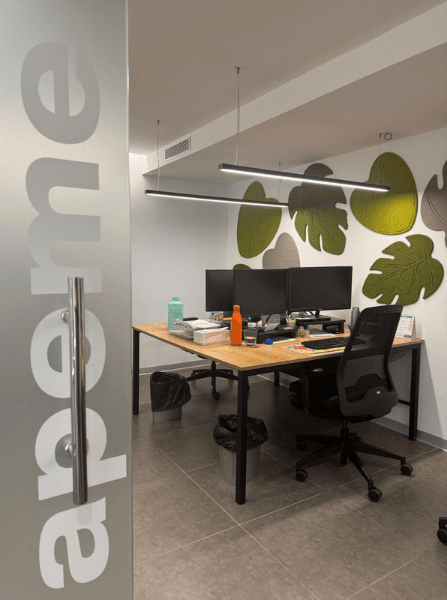
Today that view has changed. Decorative acoustic panels make it possible to control sound while bringing character, colour and texture to the space.
For architects and interior designers, this opens up a clear opportunity: to stop choosing between acoustic comfort and design, and start using acoustics as one more resource in the project.
The key is to integrate it from the outset, with both aesthetic and technical criteria.
Colour: from technical element to design resource
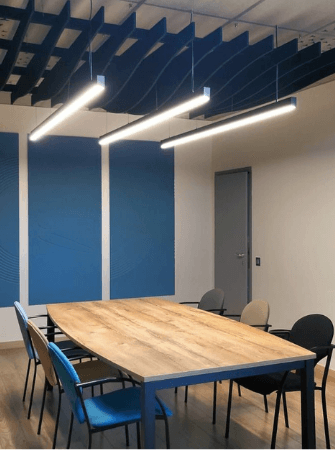
Colour is one of the most powerful tools for integrating acoustics into an interior. Well chosen, a panel stops reading as an add-on and becomes part of the composition.
It can blend in with the surrounding surfaces, so that the treatment goes practically unnoticed. Or it can act as a counterpoint, creating a visual focal point that organises the space.
In offices, hotels, restaurants and retail spaces, colour also helps to define zones, reinforce brand identity and bring warmth to environments that, without treatment, often feel cold and noisy.
And there is an important advantage: within the same product range, choosing one colour or another does not change its acoustic performance. Absorption depends on thickness, density, the air gap and the treated surface area, not on the chosen shade.
Form: geometry that also works with sound
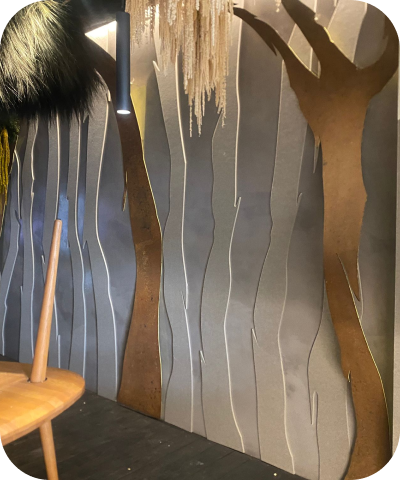
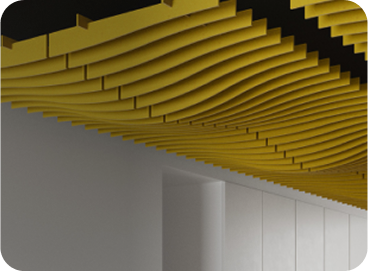
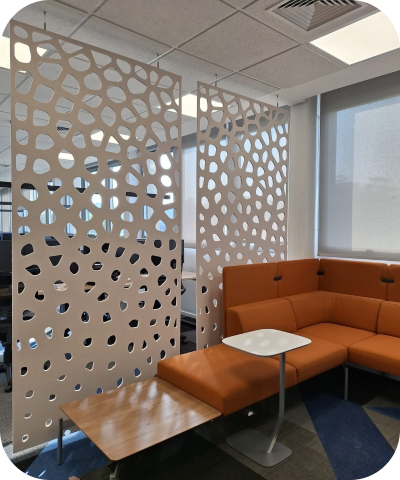
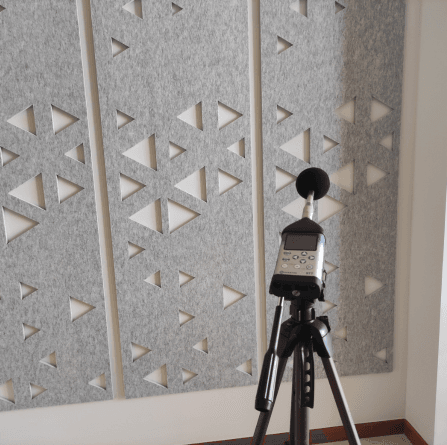
Form is the second major resource. Flat, grooved, three-dimensional, curved or organic panels make it possible to adapt the acoustic treatment to the language of each project.
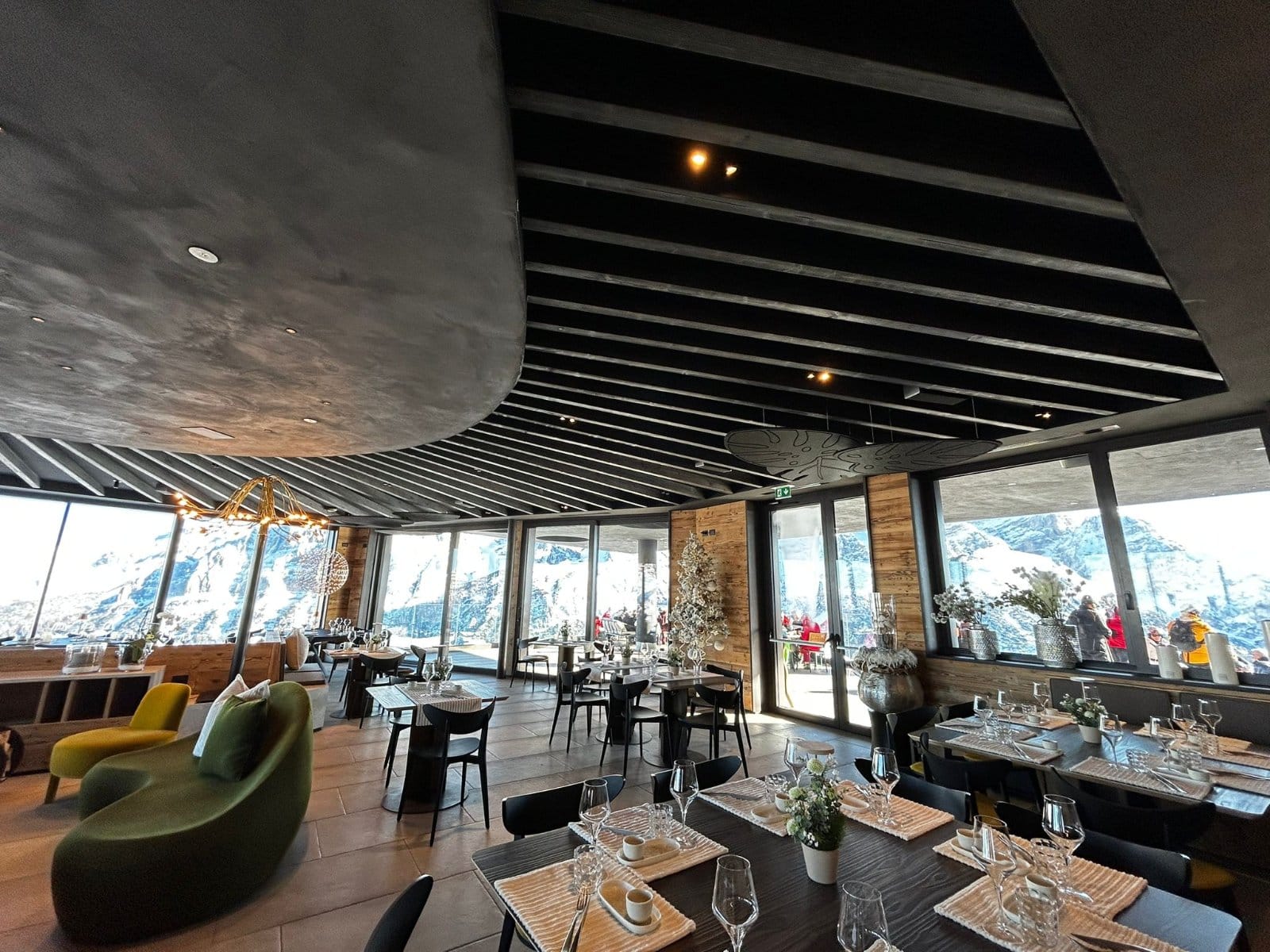
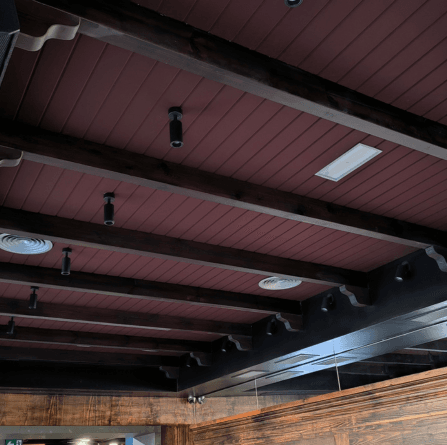
A textured wall, a rhythmic ceiling or a suspended element with its own geometry can become the centrepiece of a space while still doing its job.
Geometry also helps to resolve complex situations: high ceilings, curved walls, open-plan areas or spaces where not every surface can be treated.
What matters is that form supports function. A visually striking proposal must still provide the absorption surface needed to reach the acoustic target of the space.
Customisation: when the panel is designed for the project
Not every project fits a standard solution. Sometimes the concept calls for a specific colour, a special format or a design that relates to the brand or the existing architecture.
Customisation allows the acoustic treatment to adapt to the project, not the other way round.
Made-to-measure sizes, colour combinations, bespoke cuts and geometries make it possible to develop unique pieces that become part of the interior design narrative.
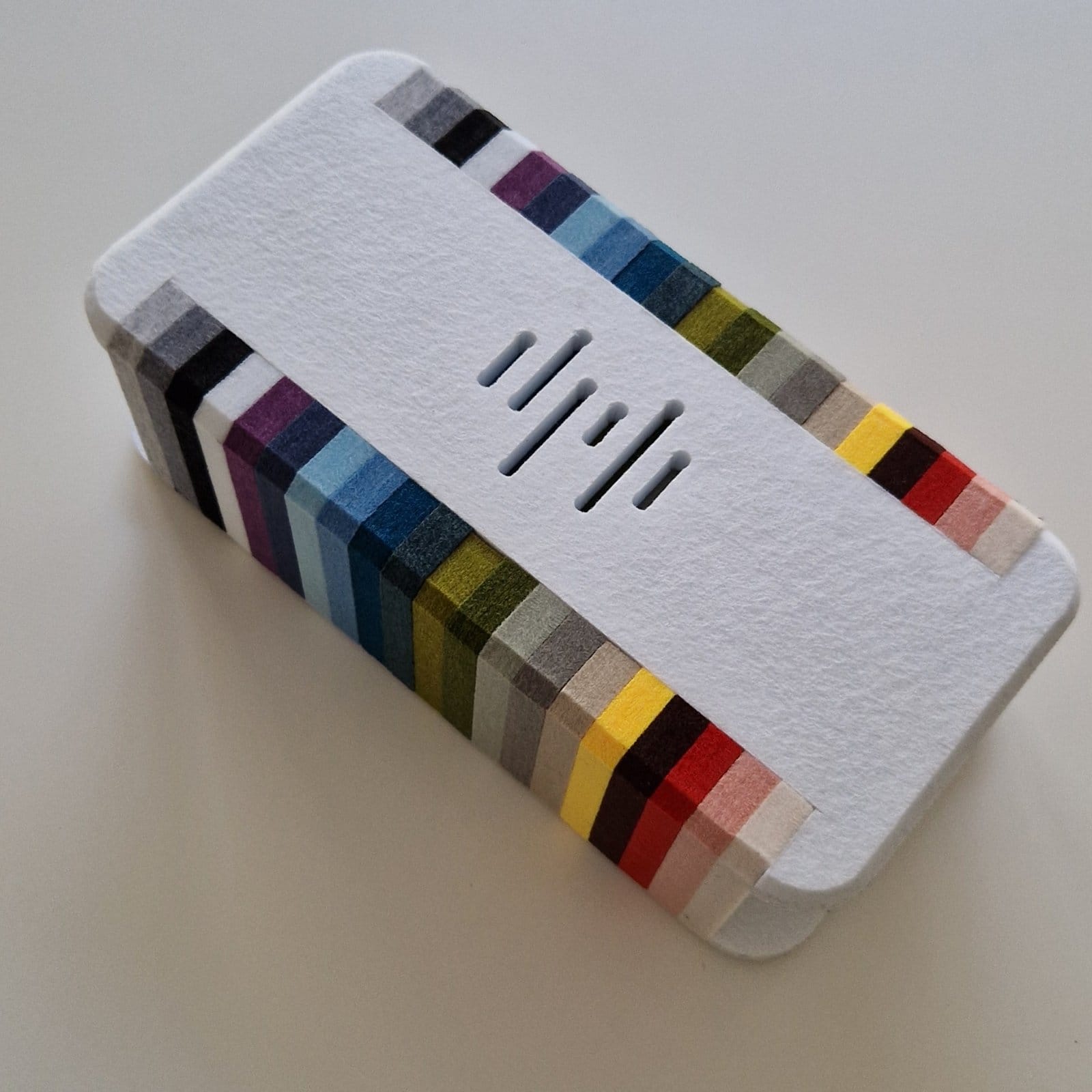
For it to work, it should be planned at the design stage: this way sizes, production lead times and installation can be coordinated with the other trades, avoiding last-minute adjustments.
Performance and aesthetics do not compete
Integrating acoustics without sacrificing aesthetics does not mean compromising on performance. It means making design decisions with the technical data on the table.
The acoustic target is defined by the use, volume and materials of the space. From there, colour, form and customisation are the tools to achieve it with visual consistency.
These are some of the decisions that most influence the final result:
| Design decision | What it brings to the project | What to bear in mind |
|---|---|---|
| Colour | Reinforces the identity of the space, defines zones and adds warmth | Consistency with the project palette, natural light and the use of each zone |
| Form and geometry | Turns the acoustic treatment into an element with architectural presence | That the geometry supports the effective absorption surface |
| Format and modularity | Visual rhythm and ease of covering large surfaces | Joints, alignments and the relationship with furniture and building services |
| Location | Wall, ceiling or suspended elements: each one changes how the space is read | Clear height, lighting, HVAC and maintenance access |
| Customisation | Bespoke designs aligned with the brand or the project concept | Defining it at the design stage to coordinate lead times, sizes and installation |
When these decisions are made together, the result is a space that sounds better and also conveys exactly what the project wants to express.
Harmonium | Acoustic design with its own identity
At Harmonium, we believe acoustics should add to design, never take away from it. That is why we work with architects, interior designers, engineering firms and specifiers to develop solutions that are integrated from the project stage.
Our wall, ceiling and suspended acoustic panels offer a wide variety of colours, shapes and finishes, with certified acoustic performance and customisation options for every concept.
Because a good project does not have to choose between how it looks and how it sounds: it can achieve both at the same time.